We proudly provide services throughout every city, town, and community in Arizona.
Our Asbestos & Hazardous Material Removal Process
Engineering Your Peace of Mind
Hazardous mitigation is a highly regulated, surgical science. We deploy a multi-phase structural protocol to completely isolate toxins, cleanse your air, and return your property to a certified life-safe condition.
Material Sampling & Air Quality Testing
We begin by identifying suspect asbestos-containing materials (ACM)—such as acoustic popcorn ceilings, pipe insulation, or vinyl flooring tiles. Our certified team extracts bulk material physical samples under safe conditions and submits them to an accredited laboratory for microscopic analysis to verify presence, type, and friability before work begins.
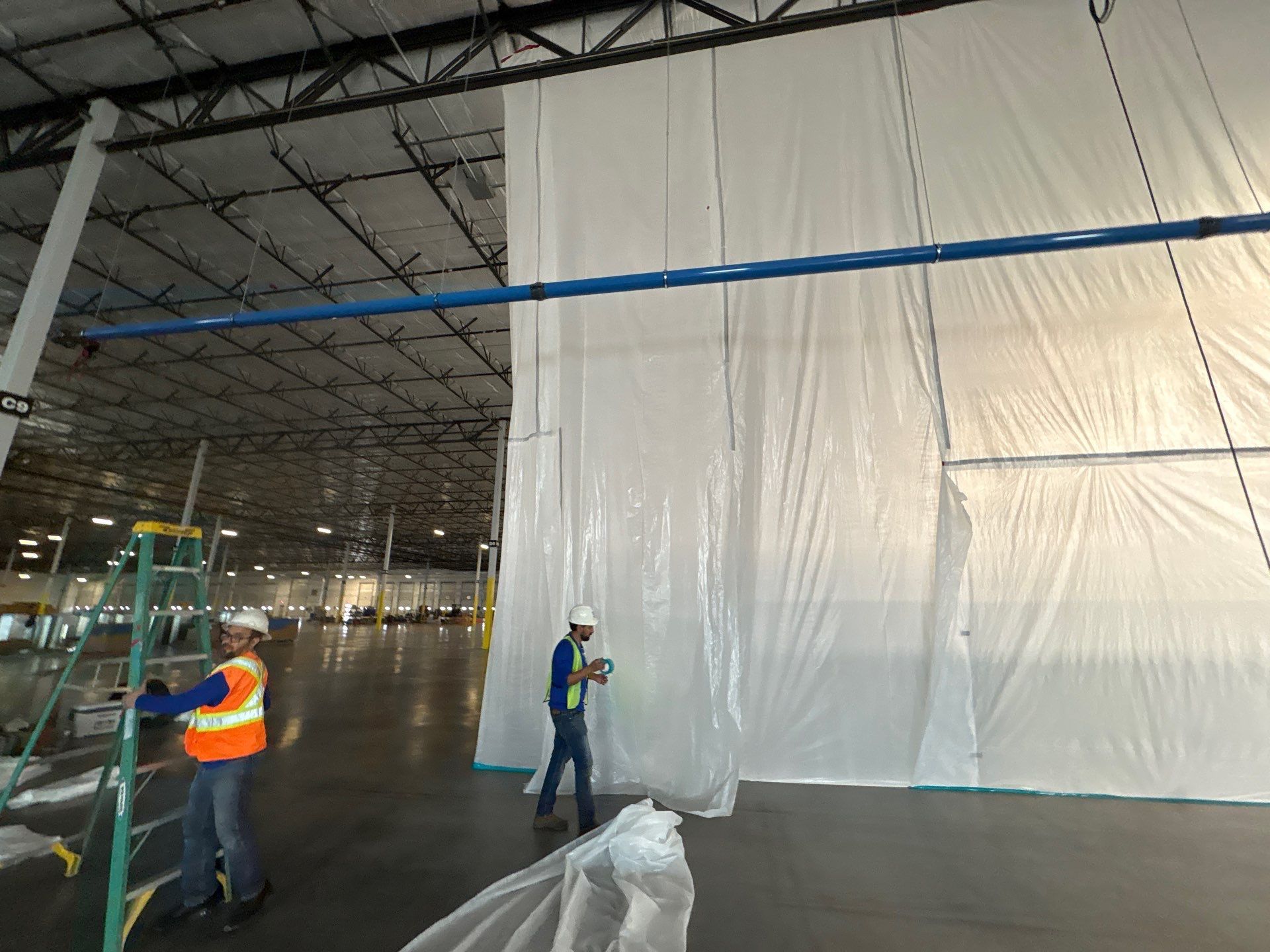
High-Impenetrability Containment Engineering
Our technicians build critical engineering barriers using heavy-duty, fire-retardant plastic sheeting and multi-stage zip-door airlocks, completely sealing off the contaminated workspace from the unaffected zones of the property.
Negative Air Pressure Stabilization
We activate heavy-duty industrial negative air machines equipped with multi-stage HEPA filters inside the containment zone. This creates a continuous vacuum effect, capturing loose airborne microscopic asbestos fibers and preventing them from migrating into outside spaces.
Eco-Conscious Extraction & Sterilization
To completely eliminate toxic dust, we utilize professional low-pressure wet-stripping methods to carefully remove materials down to the bare framing. All asbestos debris is immediately placed into labeled, multi-layer hazardous waste disposal bags and hermetically sealed.
Post-Mitigation Clearance Audit
Before our structural containment barriers can legally be taken down, we coordinate with a third-party, independent industrial hygienist to run aggressive final air clearance testing. This independent laboratory verification legally guarantees that your property's interior breathing atmosphere is perfectly fiber-free.
Uncompromising Protection Protocols
Zero Cross-Contamination Guarantee
We use an advanced, highly pressurized two-chamber airlock system for all field technicians entering or exiting contaminated property spaces, keeping unaffected rooms completely safe.
Rigorous OSHA Compliance
Our field leaders carry full OSHA 30 construction safety credentials, ensuring all physical demolition and material hauling tasks are performed to strict legal standards.
Independent Air Clearance Verification
We do not check our own work; we mandate third-party industrial hygienists to run final air checks, ensuring total, uncompromised transparency for your peace of mind.
Medical-Grade Sanitization Products
Our teams use hospital-grade disinfectants that completely destroy non-visible biological threats without off-gassing toxic chemical residues into your ventilation systems.
An Absolute Vow of Safety on Every Job
At Desert Valley Abatement, LLC, we never take shortcuts with your family's health or your property's structural foundation. Every project we touch is treated with maximum care, strict regulatory compliance, and a profound respect for our clients' property investments. We stand behind our certified remediation workflows, ensuring your indoor spaces are completely transformed into healthier, hazard-free sanctuaries.
Clear Answers for Your Property's Safety
Discovering hazardous materials in your home or commercial building naturally brings up a lot of urgent questions regarding health risks, mitigation timelines, and project costs. Our team believes in absolute operational transparency, ensuring you understand every phase of our certified safety protocols. Below, we have compiled comprehensive answers to the most common questions we receive from property owners across Arizona.
Will my homeowner's or commercial property insurance cover the cost of mold remediation or asbestos abatement?
In the vast majority of cases, yes! If the environmental hazard was triggered by a sudden, accidental covered peril—such as an indoor pipe burst, appliance failure, or storm flood—your insurance policy will typically cover our services. At Desert Valley Abatement, LLC, we specialize in direct insurance coordination. We generate line-itemized digital estimates, submit them straight to your adjuster, and bill the insurance company directly so you can avoid massive out-of-pocket stress.
Do you offer upfront pricing or cash pricing for property owners paying out of pocket?
Absolutely. If an environmental issue is not covered by your insurance policy, we work closely with homeowners to provide fair, transparent cash pricing. We tailor our containment and removal plans to be as efficient as possible, ensuring you get a legal, life-safe environment that fits responsibly within your structural budget.
What is asbestos abatement, and why do I need a certified contractor like Desert Valley to remove it?
Asbestos is a highly toxic, fibrous mineral heavily used in older building materials (popcorn ceilings, floor tiles, roofing) before its severe health risks were realized. When these materials are disturbed during renovations or decay, microscopic fibers go airborne and can cause permanent lung damage. By law, asbestos must be handled by an AHERA-certified contractor operating under strict containment guidelines. We build completely sealed negative pressure zones to prevent these invisible fibers from escaping into your living spaces.
How do I know if the paint in my property contains toxic lead, and how do you fix it?
If your home or commercial structure was built prior to 1978, there is a remarkably high probability that lead-based paint is present beneath newer layers. We utilize precision surface testing to confirm its presence. Once identified, our EPA Lead-Safe certified team executes wet-scraping, surgical demolition, and continuous HEPA-vacuuming to capture and legally dispose of all toxic lead paint chips and airborne dust.
Can I just clean structural black mold myself using household bleach?
We strongly advise against this. Standard household bleach is water-based; while it may burn off visible mold on non-porous surfaces, the moisture actually sinks deep into porous materials like drywall and wood framing, feeding the hidden root system (mycelium) and causing the mold to bounce back stronger. Furthermore, wiping active mold sends millions of toxic spores airborne, spreading the contamination to your HVAC vents and surrounding rooms. Professional mold remediation requires physical containment, air scrubbing, and medical-grade botanical antimicrobials.
Do you check your own work to verify that the dangerous mold or asbestos is completely gone?
To maintain absolute integrity and total safety, we do not check our own work. Once our extraction and cleaning protocols are complete, we mandate that a third-party, independent industrial hygienist performs a rigorous post-clearance air testing audit. This independent laboratory verification legally guarantees that your property's indoor breathing environment is 100% safe before we take down our protective containment walls.
How much does asbestos removal cost in Arizona?
The cost of asbestos abatement in Arizona typically ranges from $1,500 to $4,500 for standard residential projects, while large-scale commercial demolitions can exceed $10,000. Final pricing depends heavily on the square footage of the contaminated material, its location (such as popcorn ceilings, floor tiles, or roofing transite pipes), and whether the asbestos is friable (crumbly and easily airborne). Desert Valley Abatement provides itemized, localized project walkthroughs to deliver precise, compliant structural estimates.
Is asbestos abatement covered by homeowners insurance?
Asbestos removal is covered by homeowners insurance only if the underlying material was disturbed or damaged by a sudden, accidental covered peril—such as an indoor pipe burst, a fallen tree, or fire damage. Insurance will not cover standard abatement if it is part of a voluntary home renovation or due to long-term wear and tear. When a covered disaster occurs, Desert Valley Abatement works directly with your insurance adjuster, handles all digital line-itemized billing, and coordinates claims to minimize your out-of-pocket stress.
How long does the mold remediation process take?
A standard residential mold remediation project takes between 2 to 5 days to successfully complete. The timeline varies based on the severity of the moisture intrusion, how deeply the mold has penetrated porous wood framing or drywall, and the drying time required for structural stabilization. Our certified team utilizes heavy-duty industrial dehumidifiers and HEPA air scrubbers to safely accelerate the containment, extraction, and air-cleansing process without compromising safety standards.
How do I know if I need a professional mold remediation specialist?
You should hire a certified specialist if the visible mold coverage exceeds 10 square feet, if you smell a persistent musty odor but cannot locate the source, or if occupants are experiencing unexplained respiratory issues. Wiping down large areas of black mold with household bleach fails to kill structural root systems and sends millions of toxic spores airborne. Professional mitigation isolates the area under negative air pressure to eliminate hidden spores and permanently stop structural cross-contamination.
Asbestos Abatement
What is asbestos abatement, and why do I need a certified contractor like Desert Valley to remove it?
Asbestos is a toxic, fibrous mineral used in older building materials such as popcorn ceilings, floor tiles, and roofing before its health risks were known. When disturbed during renovation or decay, microscopic fibers go airborne and can cause permanent lung damage. By law, asbestos must be handled by an AHERAcertified
contractor working under strict containment. From our Gilbert, AZ headquarters we serve property owners statewide, building fully sealed negative pressure zones so those invisible fibers can't escape into your living spaces.
How much does asbestos removal cost in Arizona?
Standard residential projects across Arizona typically range from $1,500 to $4,500, while large commercial demolitions can exceed $10,000. Final pricing depends on the square footage of contaminated material, its location (popcorn ceilings, floor tiles, transite roofing pipes), and whether the asbestos is friable. We provide itemized project walkthroughs statewide for precise estimates.
Is asbestos abatement covered by homeowners insurance?
Is asbestos abatement covered by homeowners insurance? It's covered only when the material was disturbed by a sudden, accidental covered peril such as a pipe burst, a fallen tree, or fire damage. Voluntary renovations or long-term wear aren't covered. When a covered disaster occurs, we work directly with your adjuster, handle digital line-itemized billing, and coordinate the claim to minimize out-of-pocket stress.
How do I know if my Arizona home contains asbestos?
Homes built before the 1980s commonly contain asbestos in popcorn ceilings, vinyl flooring, pipe insulation, and roofing. Visual inspection alone isn't reliable, so our certified team extracts bulk physical samples under safe conditions and submits them to an accredited lab for microscopic analysis to verify presence, type, and friability before any work begins.
Is it safe to stay in my home during asbestos removal?
For most projects we recommend vacating the contained work zone. We seal off the area with fire-retardant plastic sheeting and multi-stage zip-door airlocks and run negative air pressure so fibers can't migrate to unaffected rooms. Our estimator will advise whether you can remain in unaffected areas based on the scope of your specific job.
How long does asbestos abatement take?
Most residential abatement projects are completed within a few days, depending on square footage, material location, and the required containment setup and clearance testing. We provide a project-specific timeline during your free estimate so you know exactly what to expect.
What is friable vs. non-friable asbestos?
Friable asbestos is crumbly and easily releases fibers into the air when touched, making it the most hazardous. Non-friable asbestos is bound within a solid material and is more stable until it's cut, sanded, or broken during renovation. Both require certified handling, and lab testing tells us which type you have.
Can I remove popcorn ceiling asbestos myself?
No. Scraping a popcorn ceiling releases enormous amounts of airborne fibers throughout your home and HVAC system, and DIY disposal is illegal for regulated asbestos waste. Our team uses low-pressure wet-stripping, HEPA vacuuming, and labeled multi-layer hazardous waste bags that are hermetically sealed for legal disposal.
How do you safely dispose of asbestos materials?
All asbestos debris is immediately placed into labeled, multi-layer hazardous waste disposal bags and hermetically sealed inside the containment zone, then transported to authorized hazardous waste facilities in full compliance with EPA and Arizona state regulations.
Do you provide air clearance testing after asbestos removal?
Yes. Before our containment barriers are legally taken down, we coordinate with a third-party, independent industrial hygienist who performs aggressive final air clearance testing. This independent lab verification legally guarantees your indoor air is fiber-free.
Lead Paint Removal
How do I know if the paint in my property contains toxic lead, and how do you fix it?
If your home or commercial structure was built before 1978, there's a high probability lead-based paint is present beneath newer layers. We use precision surface testing to confirm it. Once identified, our EPA Lead-Safe certified team performs wet-scraping, surgical removal, and continuous HEPA-vacuuming to capture and legally dispose of all toxic lead chips and dust.
Why is lead paint dangerous to my family's health?
Lead dust and chips are especially harmful to children and pregnant women and can cause developmental, neurological, and organ damage. Because lead deteriorates into fine dust that settles on floors and windowsills, it's often ingested or inhaled without anyone noticing—making professional, contained removal essential.
Is lead paint removal covered by insurance?
Coverage generally applies only when the lead hazard results from a sudden, accidental covered peril rather than routine repainting or renovation. We coordinate directly with your insurance adjuster and submit line-itemized digital estimates whenever a covered event applies.
How much does lead paint removal cost in Arizona?
Cost depends on the square footage of affected surfaces, the number of layers, accessibility, and disposal requirements. We provide free, itemized walkthroughs to property owners statewide so you receive a transparent estimate before any work begins.
What does EPA Lead-Safe certified mean?
It means our crews are trained and authorized under the EPA's Renovation, Repair and Painting (RRP) rule to safely contain, remove, and dispose of lead-based paint. This certification is legally required for disturbing lead paint in pre-1978 structures.
Can I just paint over lead-based paint instead of removing it?
Encapsulation (sealing) is sometimes an option, but it isn't permanent and fails as the surface ages, chips, or is disturbed during future renovations. We assess whether removal or another lead-safe approach is the right long-term solution for your property.
How long does a lead paint abatement project take?
Timelines vary with the surface area, containment needs, and clearance testing. Most residential projects are completed in a matter of days, and we provide a project-specific schedule during your estimate.
Do I need to move out during lead paint removal?
Because lead dust spreads easily, we strongly recommend keeping occupants— especially children and pregnant women—out of the contained work area. We isolate the zone and use continuous HEPA vacuuming to keep contamination from migrating.
How do you dispose of lead paint waste safely?
All lead debris and contaminated dust are hermetically sealed and disposed of at authorized hazardous waste facilities, in compliance with EPA and Arizona regulations.
Is lead paint testing required before buying or renovating an older home?
For any home built before 1978, testing is strongly recommended before renovation or purchase because disturbing hidden lead layers creates serious exposure. We offer precision surface testing statewide to confirm presence before any removal or repainting work starts.
Mold Remediation
Can I just clean structural black mold myself using household bleach?
We strongly advise against it. Household bleach is water-based—it may burn off surface mold but soaks deeper into porous drywall and framing, feeding the hidden root system (mycelium) so the mold returns stronger. Wiping active mold also sends millions of spores airborne into your HVAC and other rooms. Professional remediation requires containment, air scrubbing, and medical-grade botanical antimicrobials.
How long does the mold remediation process take?
A standard residential project takes 2 to 5 days. The timeline depends on the severity of moisture intrusion, how deeply mold has penetrated framing or drywall, and required drying time. We use industrial dehumidifiers and HEPA air scrubbers to safely accelerate containment, extraction, and air cleansing.
How do I know if I need a professional mold remediation specialist?
Hire a certified specialist if visible mold exceeds 10 square feet, if there's a persistent musty odor you can't locate, or if occupants have unexplained respiratory issues. DIY bleach fails to kill root systems and spreads spores. Professional mitigation isolates the area under negative air pressure to eliminate hidden spores and stop cross-contamination.
What causes mold to grow in Arizona homes?
Despite the dry climate, mold thrives wherever moisture collects—roof or plumbing leaks, AC condensation, monsoon flooding, or poor ventilation in bathrooms and laundry rooms. We identify and address the moisture source first, because removing mold without fixing the source guarantees regrowth.
Is black mold dangerous to my health?
Mold exposure can trigger respiratory irritation, allergies, headaches, and worsened asthma, with greater risk for children, the elderly, and those with compromised immune systems. Because spores are microscopic and airborne, professional containment and air scrubbing are key to protecting indoor air quality.
How much does mold remediation cost?
Pricing depends on the size of the affected area, how deeply mold has penetrated structural materials, and the drying and rebuild work required. We provide transparent, itemized estimates and can coordinate directly with insurance when a covered water event is the cause.
Does homeowners insurance cover mold remediation?
Coverage typically applies when mold results from a sudden, accidental covered peril such as a pipe burst, appliance failure, or storm flood. We specialize in direct insurance coordination, generating line-itemized digital estimates and billing the insurer directly to reduce your out-of-pocket stress.
How do you prevent mold from coming back after remediation?
We locate and resolve the moisture source, contain and remove affected materials, apply antimicrobial treatments, and perform deep structural drying with industrial dehumidifiers. Verifying the structure is fully dry is what keeps spores from returning.
Will I be able to smell or see when the mold is gone?
Visible growth and musty odors should be eliminated, but true verification comes from post-remediation air testing rather than your senses alone. We use independent clearance testing to confirm the space is safe before reopening it.
Do you verify that the mold is completely gone after treatment?
Yes. We don't check our own work. After our extraction and cleaning protocols, a third-party, independent industrial hygienist performs a rigorous post-clearance air testing audit that legally guarantees your indoor air is safe before we remove our containment walls.
Biohazard Clean-up
What types of situations require professional biohazard clean-up?
Biohazard cleanup is needed for areas compromised by biological hazards
including animal waste, sewage backups, chemical spills, and other contamination that poses serious health risks. Our team performs soft demolition and/or cleanup of affected non-structural materials and sanitizes the remaining structure to a medical-grade standard before any rebuild begins.
Why can't I clean up a biohazard situation myself?
Biological contaminants carry pathogens, bacteria, and toxins that can cause serious illness, and improper handling spreads contamination further. Our crews use protective protocols, medical-grade disinfectants, and soft demolition and/or cleanup to neutralize threats safely and legally.
Do you handle sewage backup cleanup?
Yes. Sewage backups introduce dangerous bacteria and contaminated water into your structure. We remove and decontaminate affected materials, sanitize the remaining structure to a medical-grade standard, and dry the area to prevent secondary mold growth.
What disinfectants do you use for biohazard decontamination?
Our teams use hospital-grade disinfectants that destroy non-visible biological threats without off-gassing toxic chemical residues into your ventilation system, keeping your indoor air safe after the work is done.
How much does biohazard clean-up cost?
Cost varies with the type and extent of contamination, the materials that must be removed, and the level of structural sanitization or rebuild required. We provide an itemized estimate after assessing the scene and can coordinate with insurance where applicable.
Is biohazard clean-up covered by insurance?
Many biohazard events stemming from a sudden, accidental covered peril qualify for coverage. We coordinate directly with your adjuster, submit line-itemized digital estimates, and bill the insurer directly to ease the financial burden.
How quickly can you respond to a biohazard emergency?
We operate an expansive statewide emergency network with mobile mitigation units that deploy fully equipped for rapid response anywhere in Arizona, from our Gilbert headquarters out to the state's borders. Call us for the fastest dispatch.
Do you sanitize the structure after removing the biohazard?
Yes. After soft demolition and/or cleanup of compromised materials, we sanitize the remaining structure to a medical-grade standard so the space is safe before any rebuild or reoccupation.
How do you dispose of biohazardous waste?
All biohazardous materials are contained, sealed, and disposed of through authorized hazardous waste channels in compliance with health and safety regulations.
Can you handle animal waste and hoarding contamination?
Yes. We perform soft demolition and/or cleanup for areas compromised by animal waste and similar biological hazards, removing affected non-structural materials and restoring the structure to a sanitized, medical-grade condition.
Fire & Smoke Cleanup
What is selective demolition?
Selective demolition—also called soft demolition—is the surgical, non-structural removal of compromised portions of a building without damaging the surrounding architecture. It's ideal for property owners preparing for major renovations or recovering from localized damage. We perform soft demolition/removal only; we do not do hard demolition such as removing structural walls, load-bearing framing, or foundations.
What's the difference between soft demolition and hard demolition?
Soft demolition is the careful, selective removal of non-structural elements—drywall, flooring, cabinetry, fixtures, and contaminated materials—while leaving the building's structure intact. Hard demolition involves tearing down structural and load-bearing components such as walls and framing. Desert Valley Abatement specializes in soft demolition/removal and does not perform hard, structural demolition.
When do I need selective demolition services?
Soft demolition is useful when preparing for a major renovation, after localized fire, water, or structural damage, or when removing materials contaminated by hazards before a clean rebuild can begin.
Is selective demolition safe for the rest of my building?
Yes—that's the point of the approach. Because soft demolition/removal is nonstructural, our crews carefully isolate and remove only the targeted sections so the surrounding architecture stays intact, which is especially important in occupied or partially damaged structures.
How much does selective demolition cost?
Cost depends on the size and complexity of the area being removed, accessibility, and whether hazardous materials are involved. We provide an itemized walkthrough estimate before work begins.
Do you handle hazardous materials during soft demolition?
Yes. When asbestos, lead, mold, or biohazards are present, we combine our certified abatement protocols with soft demolition/removal so contaminated, nonstructural materials are removed and disposed of safely before the rebuild phase.
How long does a selective demolition project take?
Timelines depend on the scope, complexity, and whether abatement is required alongside the soft demolition. We provide a project-specific schedule during your estimate.
Will selective demolition prepare my property for a rebuild?
Yes. The goal of soft demolition/removal is to leave a clean, safe foundation—with the structure intact—so your contractor can move directly into the rebuild or renovation phase without surprises.
Do you demolish structural or load-bearing walls?
No. We provide soft demolition/removal (non-structural) only and do not perform hard demolition such as removing structural walls, load-bearing framing, or foundations. For projects requiring structural teardown, you'll need a licensed structural demolition contractor.
Is selective demolition covered by insurance?
When soft demolition/removal is tied to a covered peril—such as repairing fire, water, or structural damage—it may be included in your claim. We coordinate directly with adjusters and provide line-itemized digital estimates.
Selective Demolition (Soft Demolition / Removal)
Why is smoke and soot damage as serious as fire damage?
Following a fire, soot and smoke residue can be as damaging as the flames themselves. Soot is corrosive and works into structural surfaces, while smoke odors penetrate deep into materials. We use thermal fogging and hydroxyl generators to neutralize odors and physically remove corrosive soot.
Can you remove smoke odor completely?
Yes. Surface cleaning alone won't eliminate deep-seated smoke odor. We use thermal fogging and hydroxyl generators to neutralize odors at the molecular level throughout the structure rather than simply masking them.
How soon after a fire should cleanup begin?
As soon as the property is declared safe to enter. Soot is acidic and continues to corrode surfaces and etch materials the longer it sits, so prompt response limits permanent damage. Our mobile units deploy rapidly to jobs anywhere in Arizona.
Does homeowners insurance cover fire and smoke cleanup?
Fire is a classic covered peril, so fire and smoke damage is commonly covered. We coordinate directly with your insurance adjuster, generate line-itemized digital estimates, and bill the insurer directly to reduce your out-of-pocket stress.
What is thermal fogging and how does it work?
Thermal fogging produces a heated fog that penetrates the same porous materials and crevices smoke reached, neutralizing trapped odor particles where they settled. It's one of the most effective methods for deep, lasting deodorization.
How much does fire and smoke cleanup cost?
Cost depends on the extent of soot and smoke penetration, the affected square footage, and the deodorization and structural restoration required. We provide itemized estimates and can bill your insurer directly for covered claims.
Can soot damage my HVAC system?
Yes. Smoke and soot circulate through and settle inside ductwork, recontaminating clean rooms whenever the system runs. We address affected surfaces and air quality so the residue isn't redistributed throughout your home.
How long does fire and smoke restoration take?
The timeline depends on the severity of soot deposits, odor penetration, and any structural recovery needed. We provide a project-specific schedule after assessing the damage during your estimate.
Will my belongings be salvageable after a fire?
Many items can be cleaned and deodorized depending on the degree of soot and smoke exposure, while heavily damaged porous items may not be recoverable. Our assessment identifies what can be restored versus what should be replaced.
Do you handle both residential and commercial fire cleanup?
Yes. We serve homeowners and commercial property managers statewide, with mobile mitigation units equipped for both residential crises and commercial clearance anywhere in Arizona.
Have a Question Not Listed Here?
Speak Directly with a Certified Remediation Estimator.
Every environmental scenario is completely unique. If you need urgent clarity regarding a specific material in your building or want to coordinate a professional job walk, call our Gilbert headquarters directly at (480) 914-3764 for instant personal assistance.